Wave-Based Task Orchestration: Parallelizing AI Agent Work
Breaking complex tasks into dependency-aware waves lets multiple AI agents work simultaneously—but theoretical parallelism doesn’t always match practical execution.
Breaking complex tasks into dependency-aware waves lets multiple AI agents work simultaneously—but theoretical parallelism doesn’t always match practical execution.
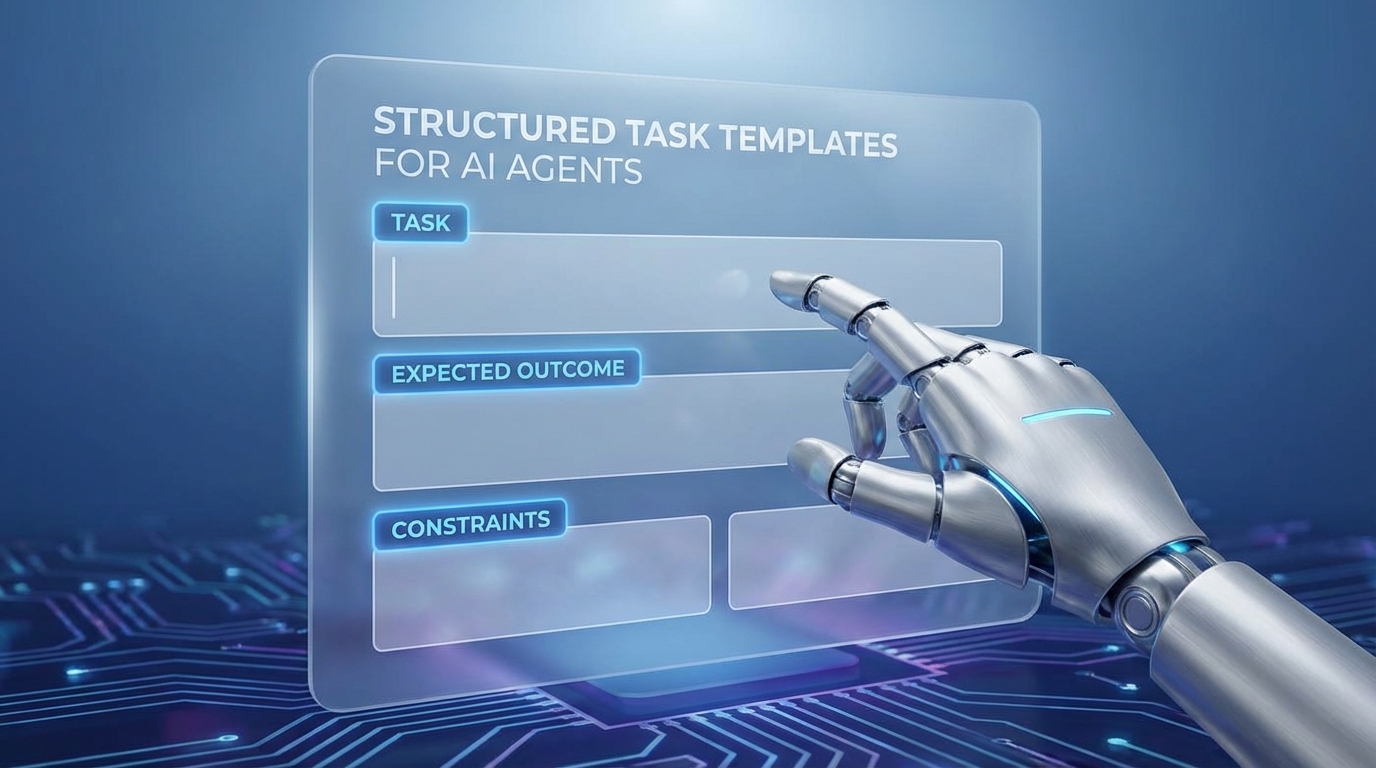
A template for creating unambiguous, self-verifiable task definitions that enable AI agents to work autonomously without constant clarification.
Use dependency-aware “waves” to parallelize multi-task implementations, where each wave contains tasks that can run concurrently.
During git workflow plugin enhancement, the plan agent created a 4-wave execution strategy:
Wave 1 (Start Immediately):
└── Task 1: Extend State & Config (foundation)

Wave 2 (After Wave 1):
├── Task 2: Add event hook [depends: 1]
├── Task 3: Add PR review checking [depends: 1]
└── Task 4: Add commit limit enforcement [depends: 1]

Wave 3 (After Wave 2):
├── Task 5: Enhance issue tool [depends: 2]
└── Task 6: Add PR tool [depends: 2,3,4]

Wave 4 (After Wave 3):
└── Task 7: Update documentation [depends: 5,6]

Critical Path: Task 1 → Task 2 → Task 6 → Task 7
Parallel Speedup: ~35% faster than sequential
Plan Agent Output: “7 Tasks organized into 4 parallel waves… Critical Path: Task 1 → Task 2 → Task 6 → Task 7”
Execution Reality: Wave 2 tasks (2,3,4) all modified same file, so done sequentially to avoid conflicts. Wave 3 and 4 executed as planned.
Theoretical parallelism ≠ practical parallelism
Read more