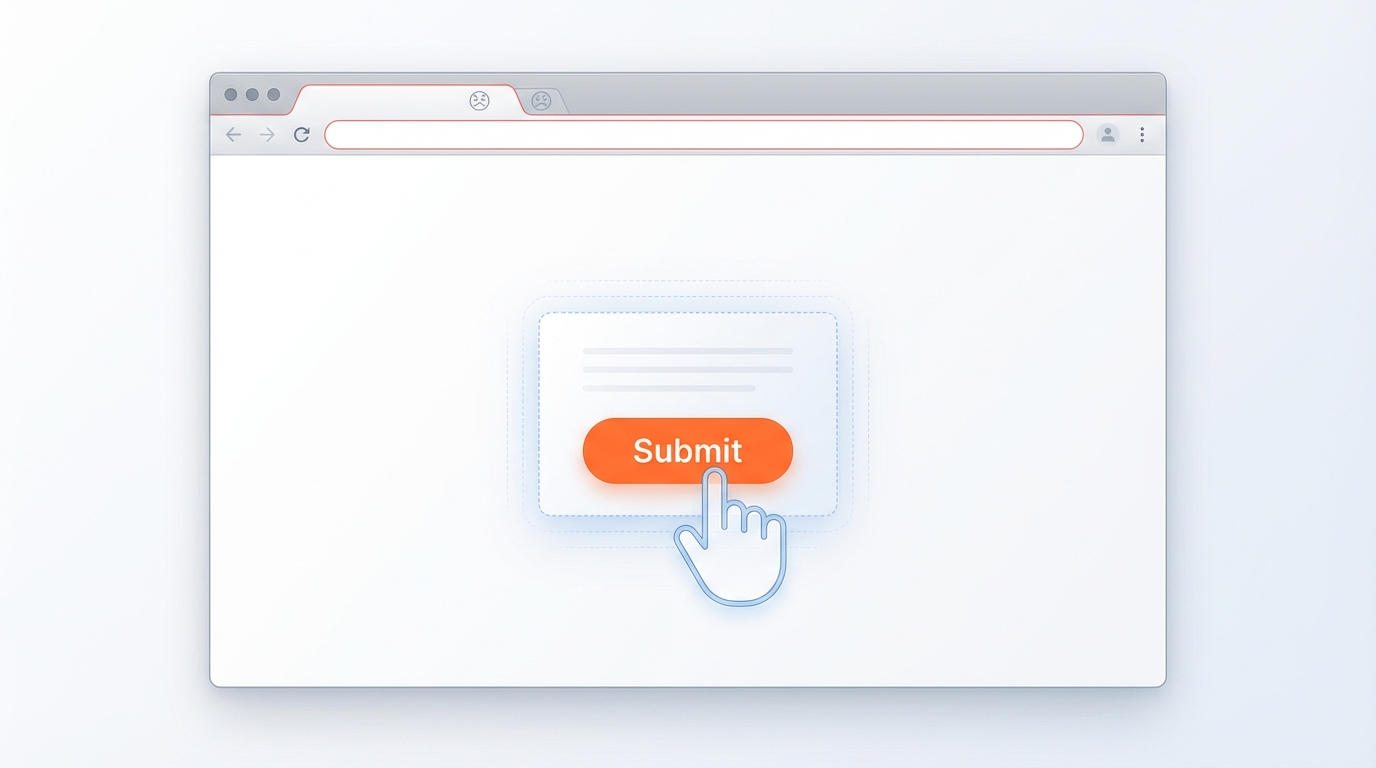
The Problem
A Playwright automation for NotebookLM uploads failed with:
Add source button not clickable
Screenshots showed the button. It was visible. The selector found it. But clicks didn’t register.
flowchart TD
    A[Find Button] --> B{Button Visible?}
    B -->|Yes| C[Click Button]
    C --> D{Click Received?}
    D -->|No| E[Timeout Error]

    F[Invisible Modal] --> G[Captures All Clicks]
    G --> D
The Investigation
Taking a debug screenshot before the failure revealed the truth: Google’s UI had spawned an invisible modal overlay.
It could have been:
- A search dialog waiting for input
- A promotional popup
- A consent dialog
- An onboarding tooltip
Whatever it was, it sat above the target button with z-index: 9999 and zero visible styling, silently eating every click.
flowchart TD
    subgraph "Visual Layer (What You See)"
        A[NotebookLM Interface]
        B["Add Source" Button]
    end

    subgraph "Actual DOM Layer"
        C[Body]
        D[Main Content]
        E["Add Source" Button<br/>z-index: 1]
        F[Invisible Overlay<br/>z-index: 9999<br/>opacity: 0 or tiny]
    end

    G[Playwright Click] --> F
    F -->|"Intercepts"| H[Nothing Happens]
    E -.->|"Never reached"| G
The Classic Symptoms
When you see these together, suspect invisible overlays:
| Symptom | What You See |
|---|---|
| Element found | Selector returns the element |
| Element visible | isVisible() returns true |
| Click fails | Timeout or no effect |
| Screenshot looks fine | Target element is clearly visible |
| Manual click works | But automation doesn’t |
The Resolution
Created a dismissOverlays() utility to clear modals before critical interactions:
async function dismissOverlays(page: Page) {
  // Press Escape multiple times to dismiss dialogs
  for (let i = 0; i < 3; i++) {
    await page.keyboard.press("Escape");
    await page.waitForTimeout(200);
  }

  // Click a known safe area to dismiss click-away modals
  try {
    await page.click("body", {
      position: { x: 0, y: 0 },
      force: true
    });
  } catch {
    // Ignore if click fails
  }
}
Usage pattern:
// Before any critical Google UI interaction
await dismissOverlays(page);
await page.waitForTimeout(500); // Let animations settle
await page.click('button[aria-label="Add source"]');
Why Google UIs Are Special
Google products love modals. They use them for:
- Feature announcements
- Account prompts (“Try the new feature!”)
- Search shortcuts
- Consent dialogs (GDPR, etc.)
- Keyboard shortcut overlays
- “What’s new” tours
These modals are designed to be dismissable for humans (press Escape, click outside) but invisible to automation scripts that only check if the target element exists.
flowchart LR
    subgraph "Human Experience"
        A[See Modal] --> B[Press Escape]
        B --> C[Modal Gone]
        C --> D[Click Button]
    end

    subgraph "Automation Experience"
        E[Modal Invisible] --> F[Find Button]
        F --> G[Click Button]
        G --> H[Click Intercepted]
        H --> I[???]
    end
Prevention Pattern
For any Google UI automation, make this standard practice:
async function safeClick(page: Page, selector: string) {
  // Step 1: Dismiss any overlays
  await dismissOverlays(page);

  // Step 2: Wait for animations
  await page.waitForTimeout(500);

  // Step 3: Wait for element
  await page.waitForSelector(selector, { state: 'visible' });

  // Step 4: Click with increased timeout
  await page.click(selector, { timeout: 10000 });
}

// Usage
await safeClick(page, 'button[aria-label="Add source"]');
Debugging Checklist
When clicks fail silently:
- Take screenshot before the failing action
- Inspect z-index - look for high z-index elements
- Check for overlays - search DOM for
role="dialog"oraria-modal - Try Escape key - often dismisses hidden modals
- Use force: true - last resort, bypasses Playwright’s actionability checks
// Nuclear option: force click ignores overlays
await page.click(selector, { force: true });
// Warning: May click "through" intended blocking modals
Key Takeaways
- Visible ≠ clickable - An element can be visible but blocked by transparent overlays
- Google loves modals - Expect them on any Google product automation
- Escape is your friend - Multiple Escape presses dismiss most overlays
- Screenshot before fail - Visual evidence reveals what selectors can’t
- Make dismissOverlays() standard - Call it before any critical interaction
The element is there. You can see it. But something invisible sits between your click and its target. Welcome to modern web UI automation.